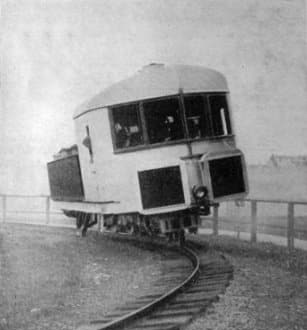
1907 invented Louis Brennan a gyroscopically stabilised monorail.

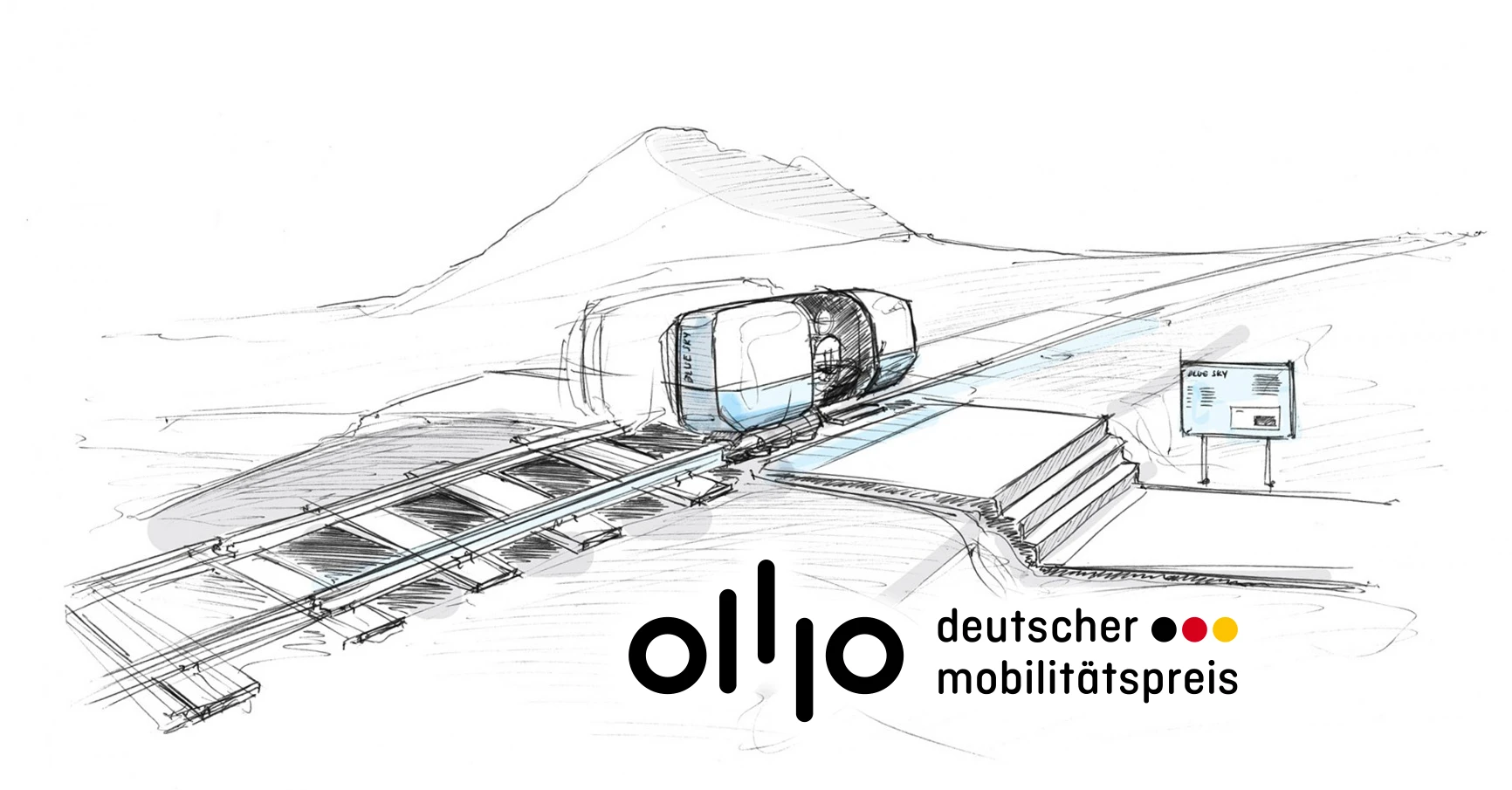
In 2018, the further development of the idea by Thorsten Försterling of the Landeseisenbahn Lippe e.V. won the German Mobility Award 2018 – Open Innovation.

The focus was no longer on technology – but on regional development: by reactivating unused rail potential for greater mobility justice in rural areas.


  • „Mobility is not just movement – it is communication, closeness, participation, and identification with space.“
  • „An innovation is an idea that has been adopted by the majority.“
  • „The future of mobility in rural areas is individual. A solution must be good and simple. It must be intuitive and feel natural.“

What

Einschienerp
country_cab

Die MONOCAB-Idee wurde 2018 unter dem Namen „CountryCab“ mit dem Deutschen Mobilitätspreis ausgezeichnet.

Prämiert wurde das Konzept kreiselstabilisierter Einschienenfahrzeuge zur Reaktivierung bestehender Bahnstrecken im ländlichen Raum.

Die Auszeichnung gilt als wichtiger Meilenstein und Ausgangspunkt für die heutige Projektentwicklung.

Mehr erfahren

Research Project MONOCAB

From Thorsten Försterling's idea from 2018, 2021 is a Research project become. In 2023, a demonstrator proved that the idea works.


The goal is now a prototype

The MONOCAB – on the tracks of the historic single-track railway line between Lemgo and Extertal.

However, the stakeholders are already thinking further into the future. Beyond the IPNV, for example, mixed traffic on the same route should also become possible through agile capacity planning: MONOCABs, freight trains, and even museum railway operations could then share the route in Extertal. Further discussed applications include works transport, small goods transport, campus railways, or construction site transport.

Prototyp entwickeln

From concept to vehicle
Development and construction of a functional MONOCAB prototype for initial real-world testing.

Betriebskonzept erarbeiten

Integration into existing mobility
Development of an operating concept, including the integration of external transport associations and existing mobility services.

Zukunfts- & Finanzierungsmodell

Securing the long-term perspective
Development of a sustainable operational and funding model for the future.

Wirtschaftspartner gewinnen

Cooperation with industry
Building a strong network of partners from companies, industry, and mobility providers.

Interessen aus der Branche sammeln

Incorporate requirements from practice
Seeking expressions of interest from logistics service providers, transport companies, and contracting authorities.

Übertragbarkeit prüfen

Potential for further routes
Analyse how the MONOCAB system can also be implemented on other disused or seldom-used railway lines.

render2-neu

Your MONOCAB is already coming to meet you!

The Way of the MONOCAB

From development, through the first prototype, to the finished product, the project is guided by nine technical maturity levels – the so-called Technology Readiness Levels (TRL).

The project has currently reached TRL 5.

This means MONOCAB is now in the phase of trial setup in an operational environment. The trial operation of the demonstrators on the operationally decommissioned railway line section between Bösingfeld and Rinteln in the Extertal has already begun.

In parallel, the development of the demonstrator into a near-series prototype will be continued.

The goal: TRL 9 in 2028 – successful testing and regular operation in Extertal.

Technology Readiness Levels

  • TRL 1Observation and description of the operating principle
  • TRL 2Application of Technology Description
  • TRL 3Proof of the functionality of a technology
  • TRL 4Laboratory experimental setup
  • TRL 5Test setup in operational environment
  • TRL 6Prototype in an operational environment
  • TRL 7Prototype in use
  • TRL 8Qualified system with proof of operational capability in the area of application
  • TRL 9Qualified system with proven successful use

Promotion and significance for rural areas

There's still plenty of room in the countryside!

Investments in rural regions are worthwhile – economically, socially, and for sustainable mobility. That's why the MONOCAB project is supported by European and national funding.

Funding is provided under the European Regional Development Fund (ERDF) during the programming period 2014–2020 in North Rhine-Westphalia. Additionally, the Ministry for Environment, Nature Conservation and Transport of the State of North Rhine-Westphalia is participating in the financing.

The total investment is around 4 million euros:

  • around 2 million euros in ERDF funding
  • Round 1.6 million Euros from the state of North Rhine-Westphalia

Contribution to European and global goals

MONOCAB not only meets regional requirements but also contributes to international goals:

  • Support for the federal government's and the European Union's climate goals
  • Strengthening equal living conditions between urban and rural areas
  • Contribution to the United Nations' 17 Sustainable Development Goals (SDGs) – particularly in the area of social justice and sustainable mobility

The meaning of rural areas

The rural space plays a central role in Europe and Germany:

  • Over 80 % of Europe's surface area are rural regions
  • Around 30 % of the European population (approx. 137 million people) live there
  • Schnell 60% der Bevölkerung Deutschlands Living in a rural area
  • Nearly 50 % of Germany's economic output are generated there
  • Over 50 % of small and medium-sized enterprises are based there

Development Status & Test Drives | Autumn 2025

From research to application: With MONOCAB-ST, we are advancing key technologies such as stabilisation, precise localisation, secure communication, and chassis solutions. In MONOCAB ready, we are addressing operational questions, system integration, and homologation preparation – with a view to real-world demonstrations in Extertal. Our goal: to better connect rural areas and intelligently utilise existing infrastructure. What began as an idea in 2018 is set to reach TRL 8 test operation by 2028.

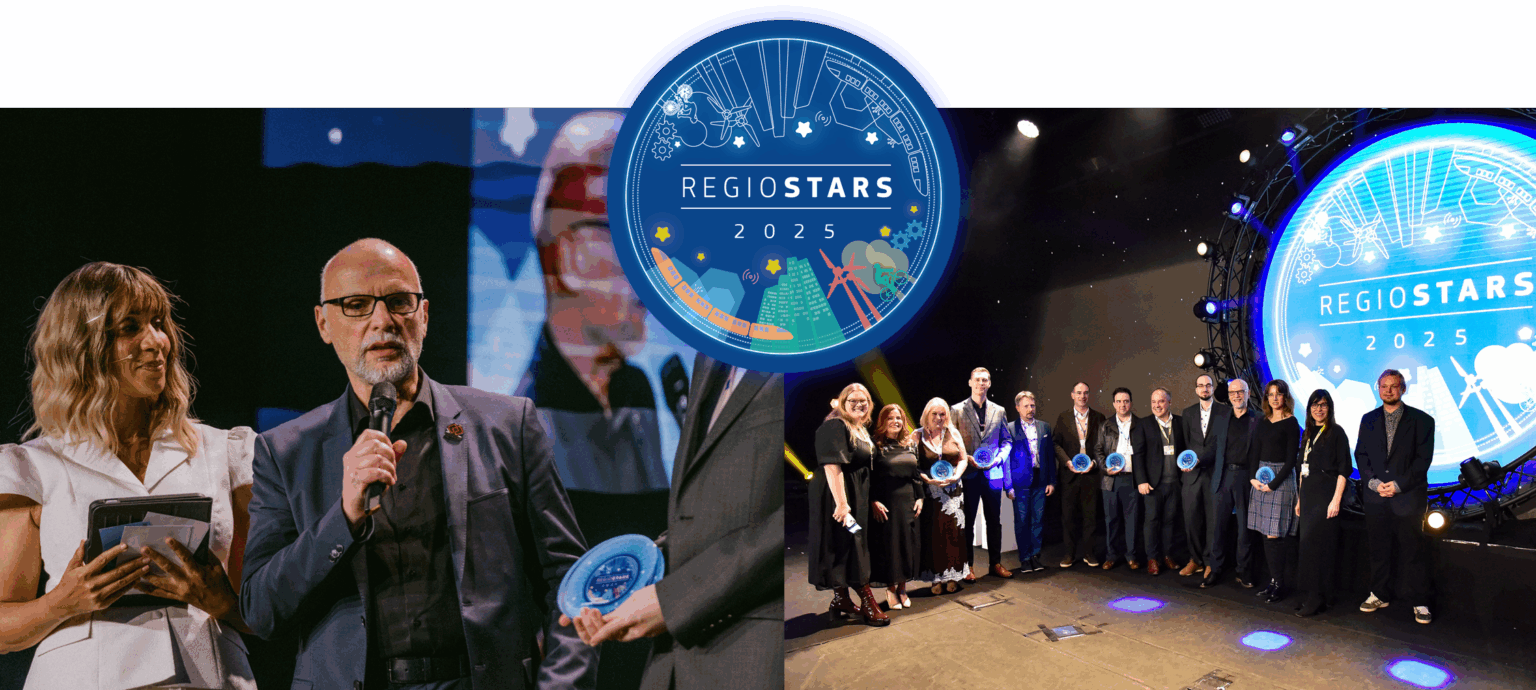
MONOCAB wins the RegioStars Award 2025!

European Award for Social Innovation in Mobility

At the RegioStars Award 2025 in Brussels, the MONOCAB mobility project convinced the European jury. With its vision „New Mobility on Old Tracks,” the project demonstrates how social innovation and technological excellence can go hand in hand. The guiding principle is „A Connected Europe“ and the ambition to give people in rural areas the right to stay where they want to live. The right to stay. This success was also made possible by the continuous support of the state of North Rhine-Westphalia, which acts as a crucial driving force in transforming an idea into an innovation.

The European Commission has awarded the MONOCAB mobility project the prestigious RegioStars Award 2025 in the „A Connected Europe“ category. The award recognises outstanding, innovative, and sustainable projects that contribute to regional development in Europe each year.

The RegioStars Awards are considered „Europe's seal of approval for regional innovation“. With them, the European Commission honours projects that serve as excellent examples of how EU funding can be used to strengthen regions and improve quality of life.

The MONOCAB system pursues the vision of revitalising disused railway lines in rural areas using autonomous, gyroscopically stabilised monorail vehicles. The guiding principle of „A Connected Europe“ is central to this, as is the aim of securing the „Right to Stay“ for people in rural areas. MONOCAB sees itself as a social innovation and social intervention in the field of mobility: a solution that is not only technically convincing but also has a societal impact.

The project is supported by a strong consortium of the Ostwestfalen-Lippe University of Applied Sciences (TH OWL), Bielefeld University of Applied Sciences (HSBI), and Fraunhofer IOSB-INA, who are backed by numerous partners and sponsors. The overall project manager is Prof. Dr.-Ing. Thomas Schulte.

In Brussels, Thorsten Försterling (TH OWL, Public Relations/Marketing) and Feried Al-Hamdawi (TH OWL) represented the project. They presented MONOCAB to the jury and the other finalists and successfully defended the idea in the competition.

The award ceremony was a fantastic event that brought the European spirit to life. The openness, connection, and enthusiasm of the participants were infectious. It was particularly inspiring to see the diversity of innovations and the commitment of the other finalists. This sense of togetherness was invigorating, and the European spirit was carried home.

MONOCAB began as a voluntary initiative and has since developed into a comprehensive project portfolio. The aim is to bring the system to series production maturity by 2032. Universities, partner companies, and territorial authorities are working closely together.

The state of North Rhine-Westphalia is a crucial engine for development. Thanks to this support, a visionary idea was able to become a tangible innovation.

The idea of the MONOCAB shows how Europe can break new ground through cooperation, courage, and creativity. Let's dare to think ahead!

Thorsten Försterling, TH OWL
Brussels/Detmold, 16 October 2025